Malibu Hindu Temple
State California
Website: https://www.malibuhindutemple.org
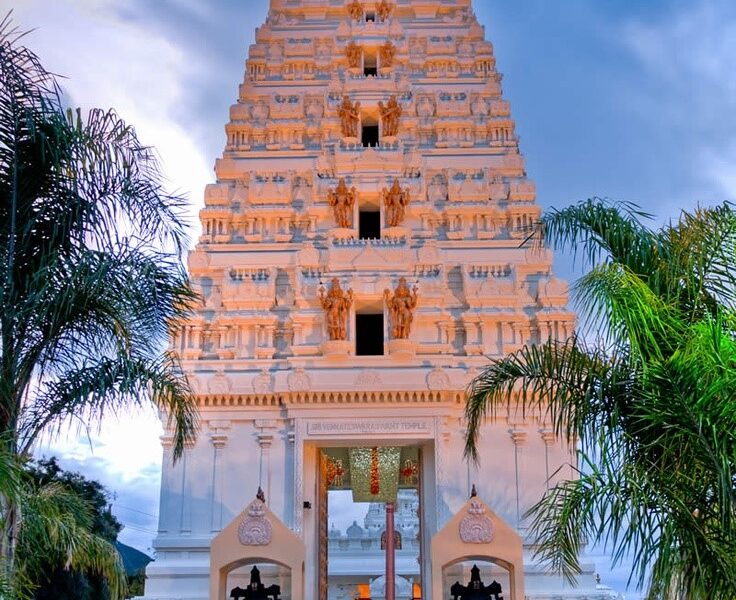
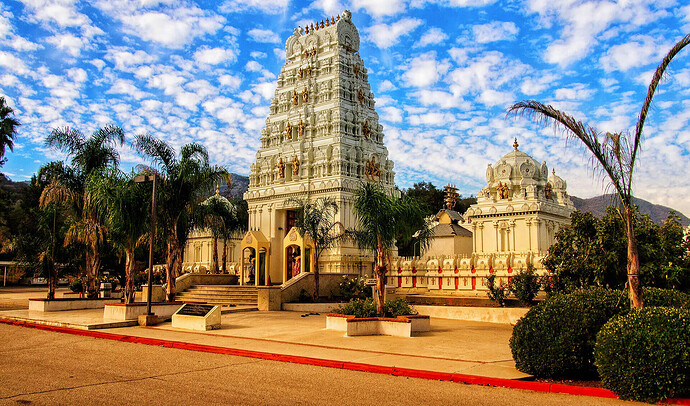
The Malibu Hindu Temple, located in the Santa Monica Mountains near Calabasas, is one of the largest Hindu temples on the West Coast of the United States. Built in 1981 in the traditional South Indian style, it serves as a major center for worship and cultural programs for the Southern California Hindu community.
More Information
History
The Malibu Hindu Temple was established to serve a growing Indian population in Southern California that lacked a dedicated place for worship and community gathering.
Foundation and Construction
- Establishment: Planning and fundraising began in the late 1970s, spearheaded by the Hindu Temple Society of Southern California.
- Initial Build: Construction officially began in 1981 on a 4.5-acre site in the Santa Monica Mountains.
- Craftsmanship: The temple was built almost entirely by more than two dozen silpis(traditional Hindu craftsmen) from Southern India. Each craftsman underwent a rigorous seven-year apprenticeship to ensure adherence to ancient religious codes.
- Design: It was designed by S.M. Ganapathi, a prominent Indian architect known for other major temples in the U.S.. The architecture follows the Chola style (dating back to the 10th century), characterized by massive white towers (gopurams) and intricate carvings of deities.
Growth and Expansion
- Phased Development: While the upper temple dedicated to Lord Venkateswara was the initial focus, the complex expanded over decades.
- Shiva Complex: A major $1 million expansion began in the late 1990s to complete the lower complex dedicated to Lord Shiva, allowing the temple to represent both principal deities of the Hindu trinity.
- Recent Modernization: Between 2018 and 2023, the temple underwent further extensive renovations, including rebuilding the auditorium to a 500-seat capacity, installing modern climate control, and completing the Shiva complex shrines.
California Through My Lens +3
Cultural Impact
Since its consecration, the temple has become a landmark for the Hindu community in California, serving over 20,000 devotees. It has also gained mainstream recognition through appearances in films like Beverly Hills Ninja (1997) and high-profile events, such as the blessing of Britney Spears’ son in 2006.
Deities
The Malibu Hindu Temple is split into two main sections, housing a wide array of deities and hosting vibrant celebrations throughout the year.
Major Deities and Shrines
The temple’s layout allows visitors to pay respects to several key figures in Hinduism across its two complexes:
-
Lord Venkateswara (Upper Complex): The presiding deity of the upper temple, a form of Lord Vishnu associated with grace and prosperity.
-
Lord Shiva (Lower Complex): The presiding deity of the lower temple, symbolizing infinite cosmic energy.
- Surrounding Shrines:
-
Goddess Mahalakshmi: Represents abundance and wealth.
-
Lord Rama, Lakshmana, and Sita: Heroes of the Ramayana.
-
Lord Krishna: Embodies love and joy.
-
Hanuman: The devoted follower of Rama.
-
Bhoodevi: The Earth Goddess, connecting worshippers to nature.
-
Visiting Information
The temple is open to the public seven days a week and welcomes visitors of all backgrounds. Admission and parking are free, though voluntary donations for upkeep are appreciated.
- Location: 1600 Las Virgenes Canyon Road, Calabasas, CA 91302 (directly across from Malibu Creek State Park).
- Operating Hours (2026):
- Weekdays: 9:00 AM – 12:30 PM and 5:00 PM – 8:00 PM.
- Weekends: 9:00 AM – 8:00 PM.
- Note: Hours may vary slightly between summer and winter seasons.
Visitor Guidelines & Etiquette
To maintain the sanctity of the temple, visitors are expected to follow specific rules:
- Dress Code: Modest attire is required. Business casual or smart casual is preferred. Shoulders and knees must be covered; shorts, tank tops, and revealing clothing are discouraged.
- Footwear: Shoes must be removed at the designated area before entering the temple buildings.
- Photography: Cameras and photography are strictly prohibited inside the temple sanctuaries, though photos of the exterior architecture are generally permitted.
- Behavior: Visitors should maintain a quiet atmosphere, silence cell phones, and avoid smoking, alcohol, or drugs on the premises.
Architecture and Deities
The temple complex is divided into two main areas:
- Upper Complex: Dedicated to Lord Venkateswara (a form of Vishnu).
- Lower Complex: Dedicated to Lord Shiva.
- Design: The structure features intricate carvings of lions, elephants, and lotus blossoms, all created by master craftsmen from India according to ancient religious standards (shastra).